A Utah nonprofit public conservation-education organizationInstitutional qualifications →
Education programs

Real eagles. Real science. A reason to care.

Programs are built around audience needs, clear learning goals, accurate natural history and safe, respectful presentation practices.
What audiences learn

More than facts. A way of seeing the natural world.

  • How Bald and Golden Eagles differ in habitat, diet and behavior
  • How vision, wings, talons, feathers and flight support survival
  • How eagles fit into food webs and healthy ecosystems
  • Why eagles are protected and how conservation aided their recovery
  • How collisions, poisoning, shooting, disturbance and habitat loss affect eagles
  • Why some injured eagles cannot be released
  • What individuals and communities can do to help
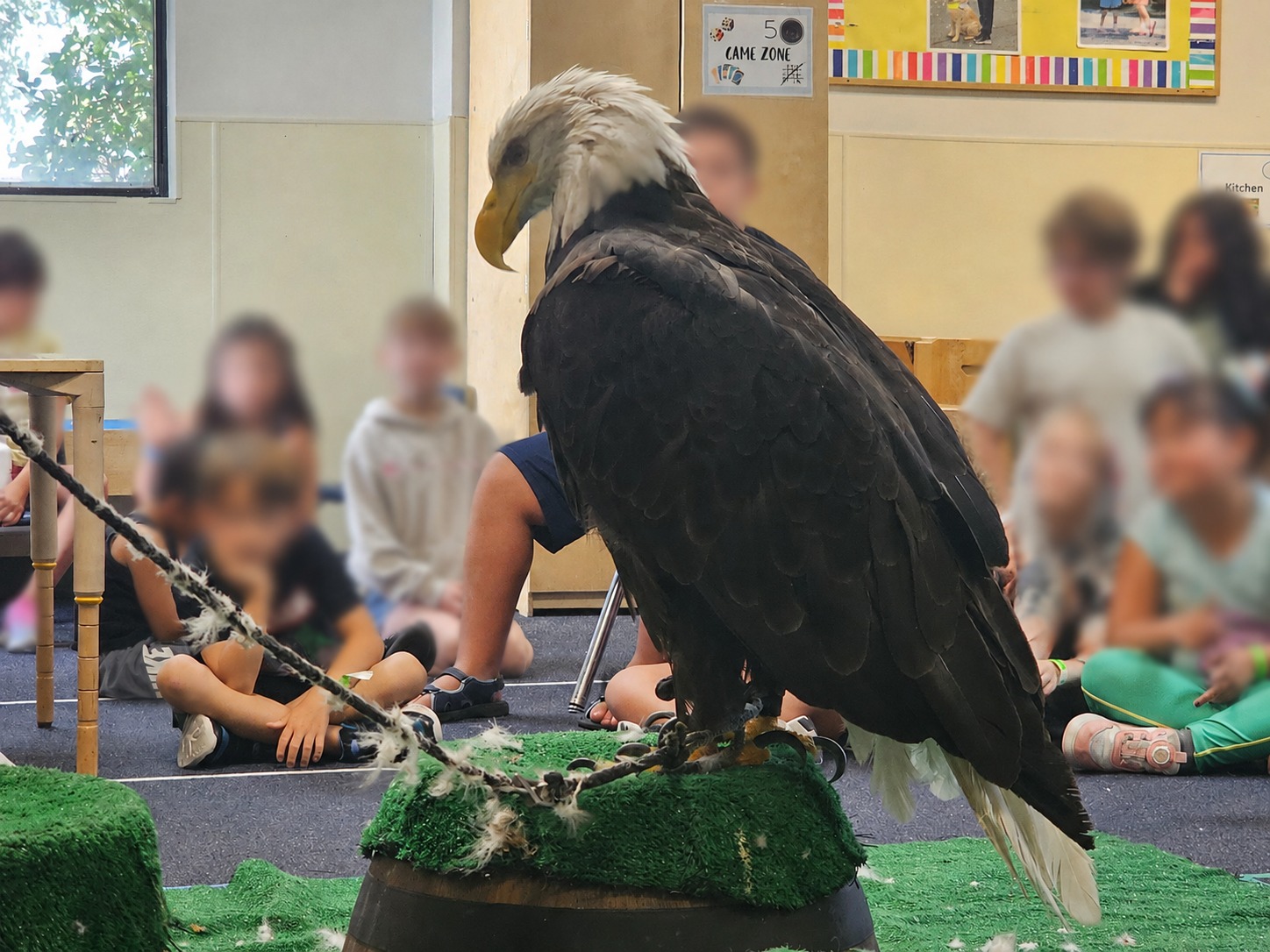
Bald Eagle natural-history lesson with children in a classroom setting
Program formats

Designed for different audiences and settings.

Schools

Classrooms & assemblies

Age-appropriate science and conservation programming for elementary through secondary audiences.

  • Fourth-grade Golden Eagle emphasis available
  • Adaptations, ecosystems and food webs
  • Educator questions and discussion
Public access

Libraries, parks & community events

Structured public programs for libraries, museums, nature centers, parks, fairs and conservation events.

  • Defined conservation lesson
  • Audience safety briefing
  • Question-and-answer time
Service

Scouting, military & civic programs

Programs connecting eagle natural history with responsibility and service—without reducing the eagle to a symbol or prop.
  • Courts of honor and Arrow of Light
  • Military advancement and recognition
  • Civic and patriotic education
Programs in practice

One conservation purpose, adapted to the audience.

Bald Eagle education program with school-age children
School-age learners
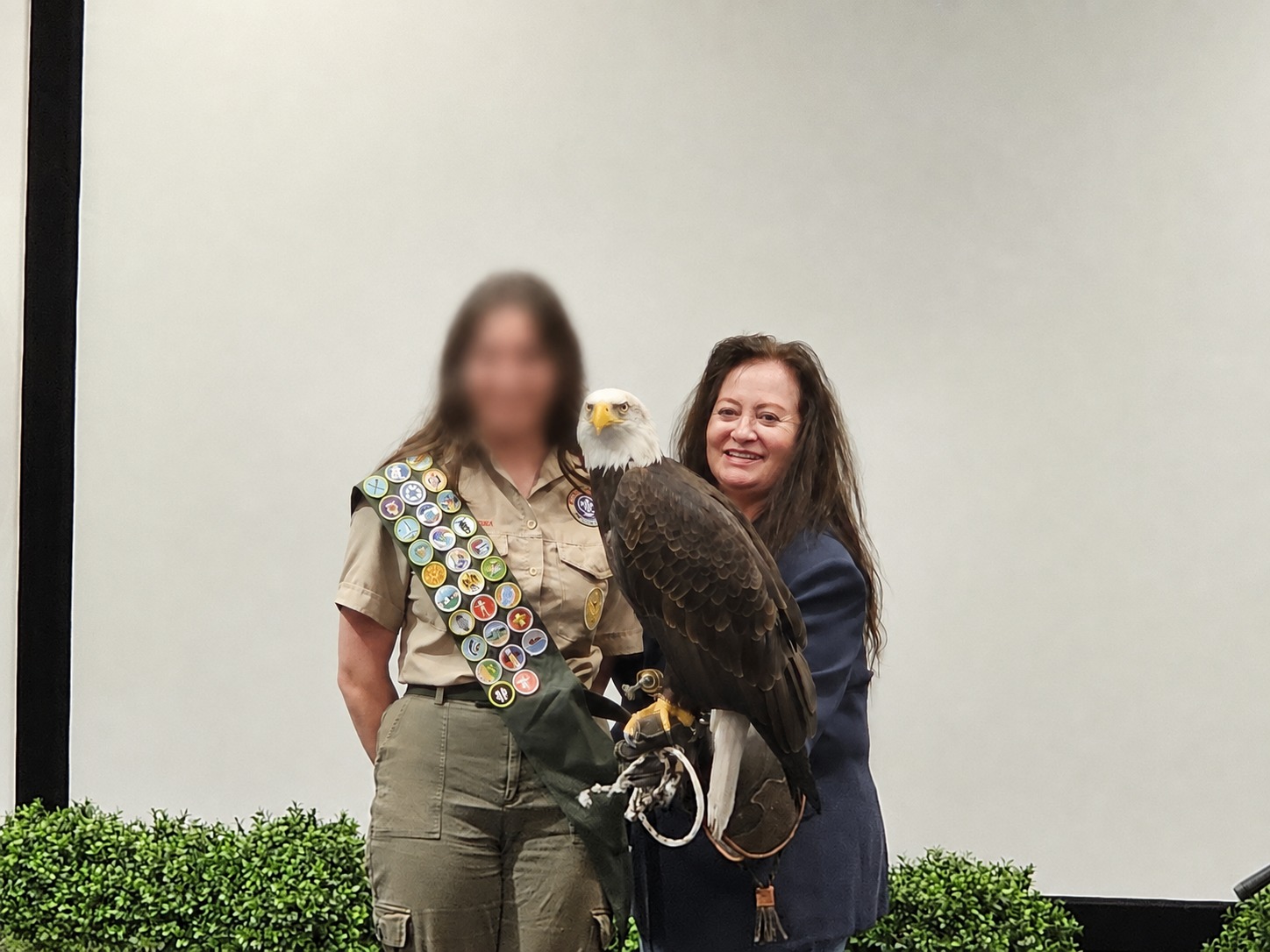
Bald Eagle conservation education connected with a scouting program
Scouting and youth service
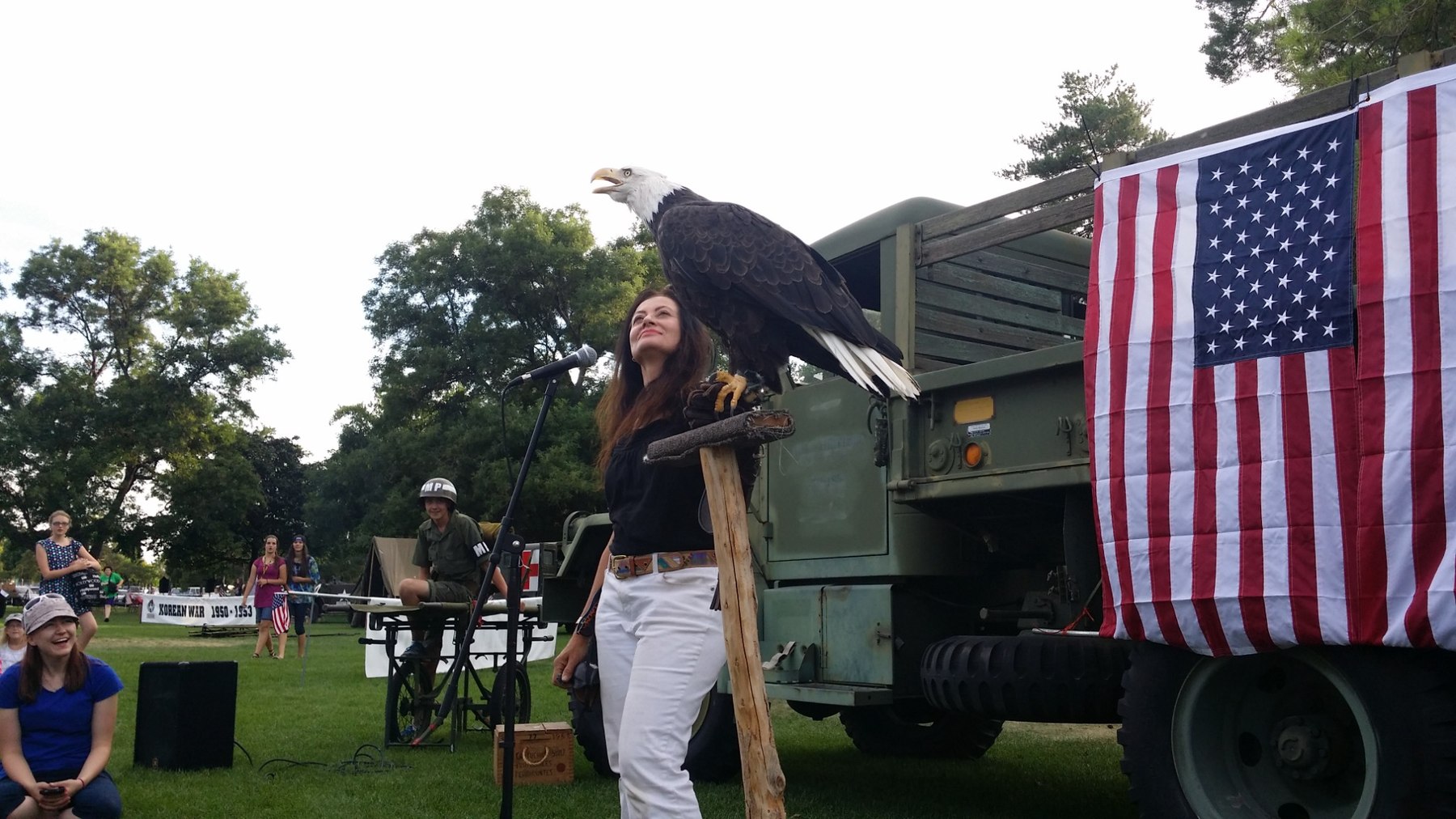
Bald Eagle conservation program at a civic and military-community event
Civic and military-community events
How a program works

Prepared for learning, safety and welfare.

1

Prepare

Confirm the audience, educational goals, access, room layout, weather and safety boundaries.

2

Teach

Build context before the eagle appears so the animal enters an active lesson—not an entertainment moment.

3

Present

A trained adult maintains control and separation while explaining visible anatomy and behavior.

4

Extend

Close with questions, conservation actions and follow-up ideas appropriate to the audience.

A proven foundation

Approximately 45 eagle programs per year.

The documented record since 2012 includes 1,900 hours of community outreach, transport, husbandry, feeding and weight management involving glove-trained Bald and Golden Eagles.

That breadth matters. The person presenting the eagle also understands the daily responsibility behind the public moment.

See the impact record
Request a program

Tell us what your audience should take away.

Program availability depends on educational purpose, travel, venue, weather, safety and eagle-welfare considerations.

Start an inquiry